
Understanding DNA, SNPs & Epigenetics
The science behind your personalized genetic report — what DNA is, how genetic variations shape your health, and why your daily choices matter.
Understanding DNA (Deoxyribonucleic Acid)
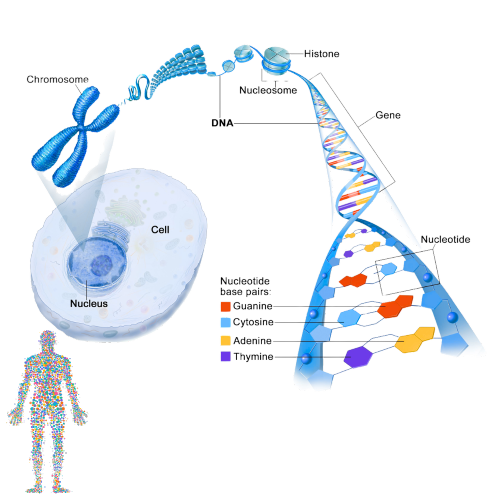
The human genome is a complete set of sequences encoded as DNA within each of the 23 distinct chromosomes in the nucleus of every human cell. DNA is like an instruction manual written in a language of four letters: A, T, C, and G. These letters represent nucleotides and combine to create about 3 billion “words” that make up your genetic code — half inherited from each parent, creating the unique combination that is you.
What Makes DNA Special
Structure
DNA forms a twisted ladder shape called a double helix, where the letters pair up in specific ways (A with T, C with G).
Function
DNA contains roughly 20,000 genes that serve as instructions for making proteins — the workhorses that control everything from your eye color to how you digest food.
Stability
While your DNA sequence stays the same throughout life, which genes are “switched on or off” can change based on your choices.
Single Nucleotide Polymorphisms (SNPs)
SNPs occur once in every 1,000 nucleotides on average, which means there are approximately 4 to 5 million SNPs in a person's genome. These are the most common types of genetic variation between people — imagine changing a single letter in a book's text.
Understanding SNPs
What They Are
SNPs account for more than 90% of all differences between unrelated individuals. They represent places where your DNA differs from someone else's by just one letter in the genetic alphabet.
How They Work
SNPs create different versions of genes called alleles. Your genotype is your specific combination of these alleles. Your phenotype refers to how these genes actually express themselves in observable traits, influenced by both genetics and the environment.
Their Importance
SNPs help explain why people respond differently to the same foods, medications, or exercise routines. By understanding your SNP patterns, we can understand how your body might react to various lifestyle choices and tailor recommendations accordingly.
Epigenetics
Epigenetics implies features that are “on top of” or “in addition to” the traditional DNA sequence. While you can't rewrite your DNA code, you can influence which parts get used or “express.”
Think of genes as volume control knobs rather than simple on/off switches. Your lifestyle choices can either amplify or suppress the expression of specific genes.
The Main Factors That Influence Your Genetic “Volume Control”
Nutrition
Exercise
Sleep
Stress Management
Environment
Probability, Not Destiny: Your genes create tendencies, not certainties. Think of genetics like weather forecasting — helpful for planning, but not absolute predictions. Knowing your genetic tendencies allows you to take proactive steps to optimize your expressions.
How We Analyze Your Genetics
We utilize proprietary algorithms, developed and refined over 10 years of clinical practice, to analyze thousands of genetic variants related to nutrition, fitness, sleep, and overall health. Rather than overwhelming you with data, we focus on the genetic factors most relevant to your daily life.
You Are the Builder
Think of this report as your personalized biological blueprint — it reveals the unique genetic foundation you were born with. However, remember that your daily choices, lifestyle habits, and environment ultimately determine how this blueprint comes to life.
What This Report Cannot Do
It Doesn't Know Your Story
While your genetics provide valuable insights, this report doesn't know your current lifestyle, health history, personal preferences, or individual circumstances that significantly influence your health outcomes.
It's Not Medical Advice
This report provides educational information about genetic predispositions and should not be used as a substitute for a professional medical evaluation or personalized healthcare guidance.
Maximizing Your Report's Impact
Partner with a Professional
We strongly recommend reviewing your genetic report with an epigenetics coach, wellness provider, or healthcare professional who can help integrate these insights with your unique lifestyle, health history, and personal goals.
Focus on What You Can Control
Use this report as motivation to optimize the lifestyle factors within your control — nutrition, exercise, sleep, stress management, and environmental choices.
The Intersection of Genetics and Nutrition
Food is one of the most powerful tools for influencing your genetic expression. We use two complementary approaches to optimize your nutrition based on your genetic profile:
Nutrigenetics: How Your Genes Affect Nutrient Needs
This field studies how genetic variations influence your body's response to different nutrients.
Personalized Requirements: Your SNPs may indicate you need higher amounts of specific vitamins, process fats differently, or are more sensitive to sodium.
Deficiency Prevention: By understanding your genetic predispositions, we can identify nutrients you're more likely to become deficient in and adjust your diet accordingly.
Optimal Absorption: Certain individuals have genetic variants that affect their ability to absorb or utilize specific nutrients, necessitating personalized dietary strategies.
Nutrigenomics: How Nutrients Influence Gene Expression
This approach examines how specific foods and nutrients can influence gene expression through epigenetic mechanisms.
Strategic Food Choices: Certain compounds in foods can promote beneficial gene expression. For example, sulforaphane in broccoli can activate detoxification genes.
Anti-inflammatory Effects: Many nutrients can help “quiet” genes associated with inflammation, supporting overall health and longevity.
Long-term Optimization: By consistently choosing foods that promote positive gene expression, you can create lasting improvements in how your body functions.